
The Things Black Elders Never Said Out Loud — But We Felt Anyway
A look at the unspoken lessons, warnings, and love that shaped us long before we understood their meaning.
By ~ronnie
“Our elders didn’t need long speeches — their silence, their looks, and their presence taught us everything.”
The Unspoken Language of the House
There was always something happening in the African American household. Pots and pans clanged in the kitchen as Mama created one of her masterpieces. Kids outside were playing hopscotch, double‑dutch, or running up and down the block. Inside, there were always instructions being given — some to guide us, some to correct us, and some to keep the peace. But elders didn’t always have the energy or patience to explain everything out loud. Sometimes a side‑eye, a raised eyebrow, or a deep sigh was all they needed. Those silent signals carried more weight than a full speech, and every child in the house knew exactly what they meant. It was a language we didn’t learn from words — we learned it from watching, listening, and feeling the room.
The Look That Said Everything
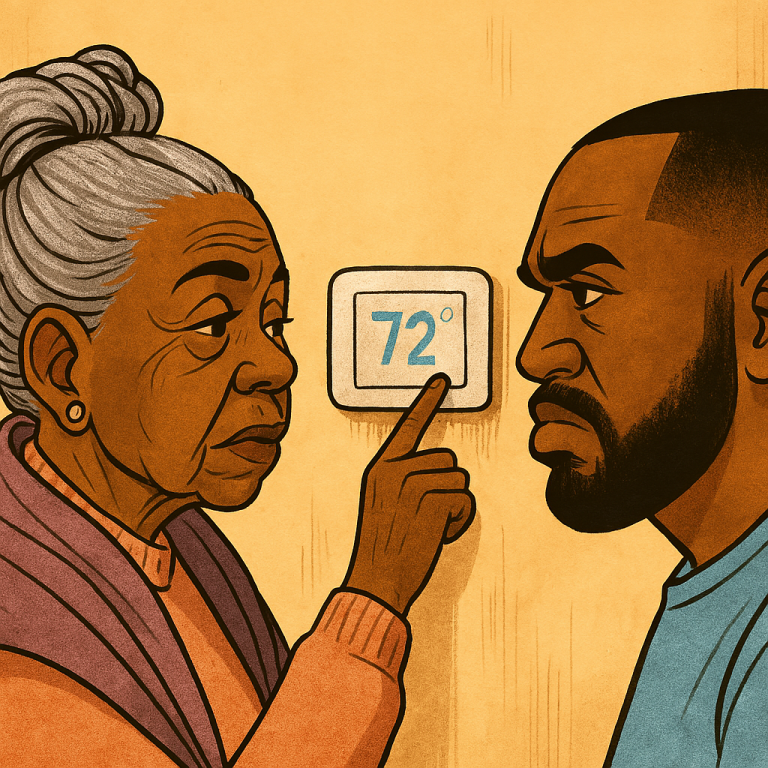
Not all looks were created equal, and every child in the house knew the difference. There was the “child, I’m tired” look — the one that meant you needed to clear the area immediately. There was the “you’re making too much noise” look — the silent reminder to take all that energy outside. And who could forget the “you’re about to make me grab my cane” look — the final warning that your silliness had gone too far. These looks were lessons just as real as “that stove is hot” or “I’m not telling you again to get in that tub.” And the same elder who could shut you down with one glance would turn around a moment later and wrap you in a loving hug. As adults, we understand now that those looks never took away from the love in the room — they simply kept order, protected peace, and cleared the space when necessary.
The Silence That Protected Us
In the Black household, there were certain outside forces that didn’t belong inside the home. Children didn’t need to know about the final notice sitting on the table or the electric company giving fifteen days before the lights were cut off. Those were adult worries with adult solutions. Elders understood that their job wasn’t to pass their fears down to the children — it was to shield them from the weight of the world for as long as they could. All we needed to know was that when we flipped the switch, the lights came on, and when we were hungry, there was food in the refrigerator. Mama and Daddy made that happen, not the burdens they carried to keep the house running. Their silence wasn’t secrecy — it was protection, a quiet promise that childhood should stay childhood for as long as possible.
The Warnings Wrapped in Humor
Black people have always used humor to get through hard times. Even during slavery, when life was cruel and inhumane, folks still found something to laugh about — the master, the foreman, even the food. Humor made the unbearable a little lighter. That same spirit followed us into the Black household. “Baby, after twelve, there’s nothing out in those streets but trouble,” wasn’t just a joke — it was a warning for kids who looked like us. And Big Mama didn’t need a whole speech; all she had to do was glance up at the streetlight, and every kid knew it was time to head home. Sometimes the jokes softened the blow: “If you’re not home when that streetlight comes on, that streetlight will be your home.” We laugh about it now, remembering how serious it felt back then. There wasn’t a slice of pecan pie waiting under that streetlight, so we took those warnings to heart.
What I Understand Now
During those times, our parents and elders shielded us from so much of the ugliness in the world and the burdens sitting heavy on their shoulders. Sure, we heard the same rumors all kids heard growing up, but most of it went over our heads, or we brushed it off, too busy being children. As adults, we now see that their silence wasn’t distance — it was protection. They carried the weight so our innocence could stay intact a little longer. We understand now that the quiet moments, the closed‑door conversations, and the things they never explained were all part of keeping us whole until it was our turn to face the world. And now we find ourselves doing the same for our own children. Childhood came with its own challenges; we would’ve hated to carry the burdens of adulthood on top of that. Looking back, we appreciate what they did for us more than they ever knew.