
Can We Talk? Why Black Elders Avoid Loud Restaurants
From jazz to jukeboxes, aging means craving places where we can hear ourselves think—and each other speak.
By ~ronnie Quote
“I came for the catfish, not the concert.”
Why Volume Feels Like Violence in Black Eldercare Spaces
The world has become crowded and loud. For Black elders, peace isn’t just a preference—it’s protection. At home, they can shape the soundscape:
“Baby, turn that music down.”
“You kids go outside and play.”
But outside the home, there’s no volume control.
A lunch invitation after church sounds delightful. The restaurant is modern, bustling, and full of life. But for many elders, it’s also a site of memory—places where they were once barred, refused service, or made to feel invisible. What was meant to be joyful becomes layered with stress.
The noise alone is enough to unravel the moment. Loud music, clattering dishes, raised voices—elders can’t hear themselves think, let alone hold a conversation. The sensory overload feels less like a celebration and more like a confrontation.
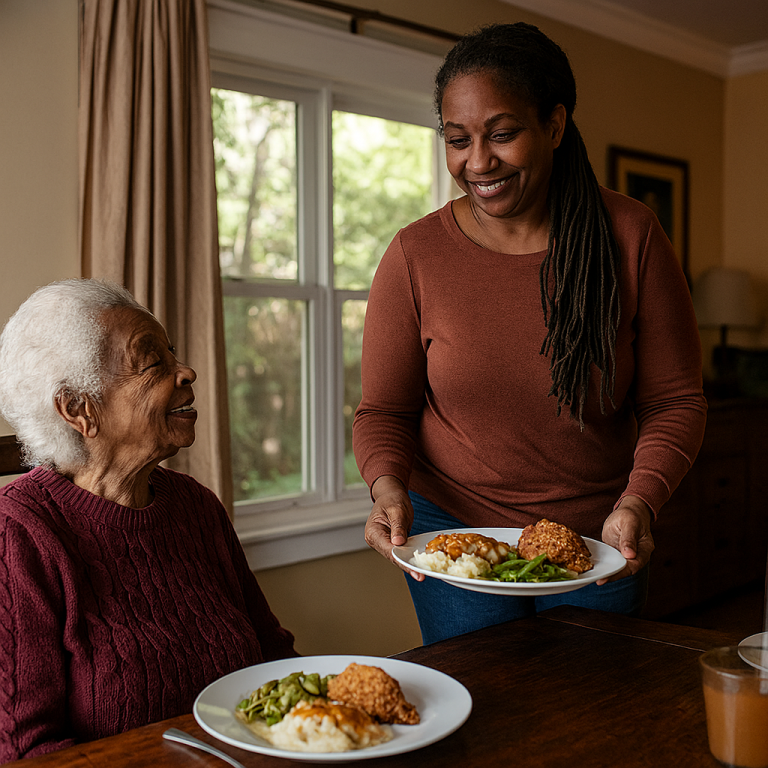
So they’d rather be back home. Where quiet lives. Where dignity isn’t drowned out. Where they can breathe.
The Cultural Need for Quiet Conversation
The after-church luncheon means more than food. For Black elders, it’s a rare chance to reconnect—to laugh, to listen, to feel part of the rhythm again. After a week of isolation, this moment matters.
But the restaurant is loud. Too loud. Dishes clatter, music blares, voices bounce off the walls. The elder can’t hear the conversation—not the way they need to. Not the way they used to.
What was meant to be joyful becomes exhausting. The family is talking, but the elder feels left out. Not ignored, just… unreachable. Distracted by the noise. Disconnected from the flow.
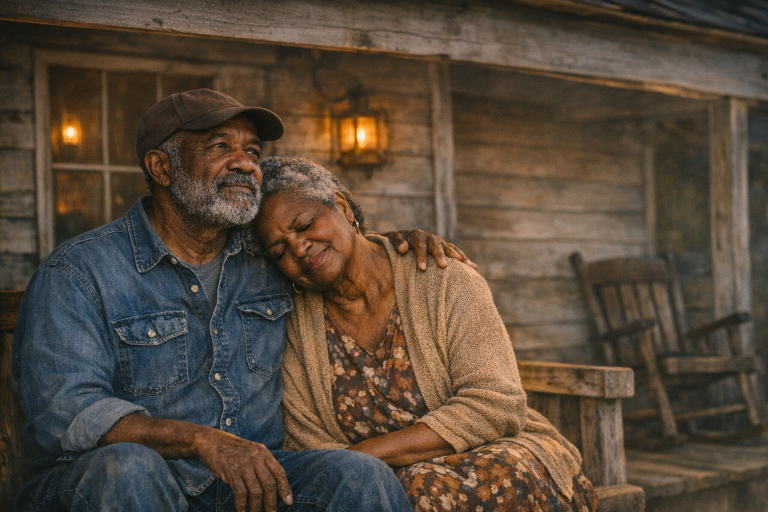
Black families have always honored storytelling, porch talk, and shared meals. These were sacred spaces—where wisdom was passed down, where laughter healed, where silence had meaning.
But here, in this noisy room, there is no storytelling. Just sound. And the elder would rather be home, where quiet still knows their name.
Gen X Caregivers and the Search for Peaceful Places
Gen X caregivers know the stakes. They’ve seen what happens when elders are left with nothing but the TV for company. They’ve watched noisy restaurants turn joyful gatherings into silent frustration. And they understand that when elders can’t join the conversation, the whole family loses something sacred.
Because every missed moment is a missed lesson. Every drowned-out voice is a story, untold. Black family legacy lives in those exchanges—in the laughter, wisdom, and the rhythm of shared meals.
So Gen X is choosing differently. They’re seeking spaces that honor rest, rhythm, and respect. Places where elders can hear, speak, and be heard.
Because quiet isn’t just comfort — it’s connection.
The world may stay noisy. But the task is clear: find quiet places with culturally aware hospitality. Gen X understands this deeply—because they, too, have felt the sting of isolation in places that once felt safe.
Because in our families, quiet isn’t the absence of sound — it’s the presence of dignity.