
Health Apps and Black Elders: When Tech Replaces Touch
From portals to pings, aging means managing more apps than grandkids—and still wanting a real person to look you in the eye.
By ~ronnie
“I’ve got six apps, three passwords, and one body that still needs a hug.”
Why Black Elders Are Drowning in Health Tech
Healthcare has shifted from hands-on care to hands-off screens, and elders are expected to adapt without support. Technology has transformed daily life—but for Black elders, especially in healthcare, it’s become a burden.
They’re expected not only to use it, but to keep up with its constant changes.
How does technology expect to keep up with a body that’s already ‘stove up’?
That’s something most doctors can’t relate to.
Technology is fast, efficient, and digital.
But our elders are at a time in life when slowing down is sacred.
Quick isn’t always a benefit—especially in healthcare.
And let’s not forget the mistrust.
Black elders carry the weight of systemic racism, unethical medical practices, and dismissive providers.
Now technology is layered on top—something they often don’t understand, and weren’t invited to shape.
This technical overload doesn’t just complicate care.
It disconnects them from real people.
And that’s not progress—it’s a problem.
The Emotional Cost of Replacing Touch With Taps
“Baby, they say my next appointment is video—what’s dat?”
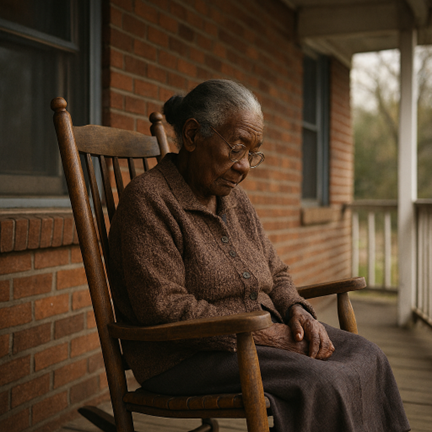
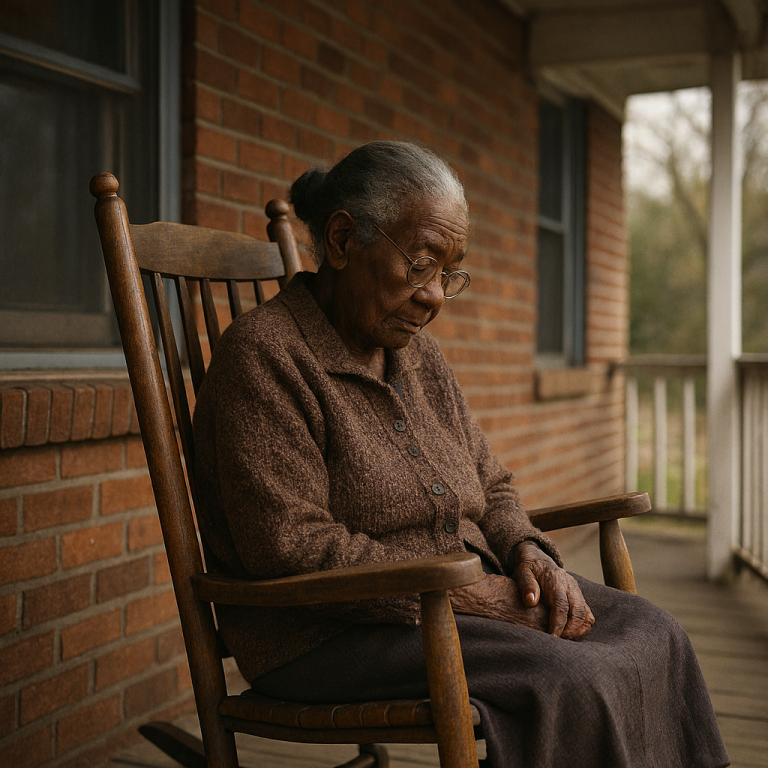
Big Mama may not know her Gen X caregiver struggles the same with technology.
Elders are wondering how the doctor’s supposed to check her sciatica over a computer—especially since she doesn’t even own one.
And her “sugar”? How he gonna check that?
They told her if she didn’t have a computer, she could use her mobile phone.
Big Mama’s got a house phone—but it’s off right now, and she’s not sure when it’ll be back on.
“Is that what they mean by a mobile phone?”
All this technology is messing with her nerves.
Can they see that over the computer she doesn’t have?
No, in Big Mama’s mind, she needs to see a person.
These health apps and video calls may be efficient for the doctors, but they can’t replace eye contact, touch, or the rhythm of a trusted voice.
And that trust? It wasn’t built overnight.
Gen X caregivers can only offer the truth:
“This is the world we live in now.
And like you taught me, Big Mama—we deal with what we have the best way we can.
We’ll figure this out together.”
The Caregiver Shuffle: Gen X, Big Mama, and the New Healthcare Rhythm
Gen X caregivers are in a pickle. Gen X is the bridge between analog elders and digital healthcare — and that bridge is cracking under pressure.
They’re juggling tight schedules, caregiving duties, and a digital world they didn’t ask for.
It used to work out fine—taking Big Mama to the doctor on the way to drop the grandbaby off at school.
Now? She’s expected to sit still for a video appointment.
Who’s taking that child to school now?
The convenience of technology is starting to feel like an inconvenience.
Especially for Black elders.
But healthcare can’t suffer—it’s essential for our legacy to keep going strong.
Truth be told, this burden on Gen X is also a lesson.
Their own appointments will increase with age.
Navigating the tech maze with Big Mama now?
It’s preparing them for their own care later.
So Gen X caregivers keep rearranging their lives to show up.
Black elders may be overwhelmed by health apps and digital tools, but they’ve got a secret weapon:
Their Gen X caregivers.
The rhythm may be digital now, but the care is still human — and that’s what keeps our elders going.