How Black Families Keep the Table Sacred
Why Sunday supper still walks with us as a healing tradition
By ~ronnie
“The table wasn’t just where we ate—it’s where we remembered, healed, and stayed whole.”
The Table Wasn’t Just for Eating
“You know that house smells like love.”
The tablecloth was pressed, even if the table was scratched.
Whether it was back in the day or present day—at Big Mama’s, your mama’s, or Auntie’s house—the centerpiece of the home was the dining room.
That’s where the good china was on display, even if it was chipped.
It was clean. It was shining.
And it was the place where everything happened:
Sunday meals, catching up on Uncle Fred’s new lady, or showing off for visitors.
That dining room table saw the most activity—on Sundays.
It wasn’t a place to sit, eat, or play unless it was Sunday.
And every Sunday, the tablecloth was pressed, even if the table was scratched.
Black family legacy lives in the dining room table.
It still holds space for healing, memory, and connection.
The Ritual of Preparation
That kitchen has been humming since 6 this morning.
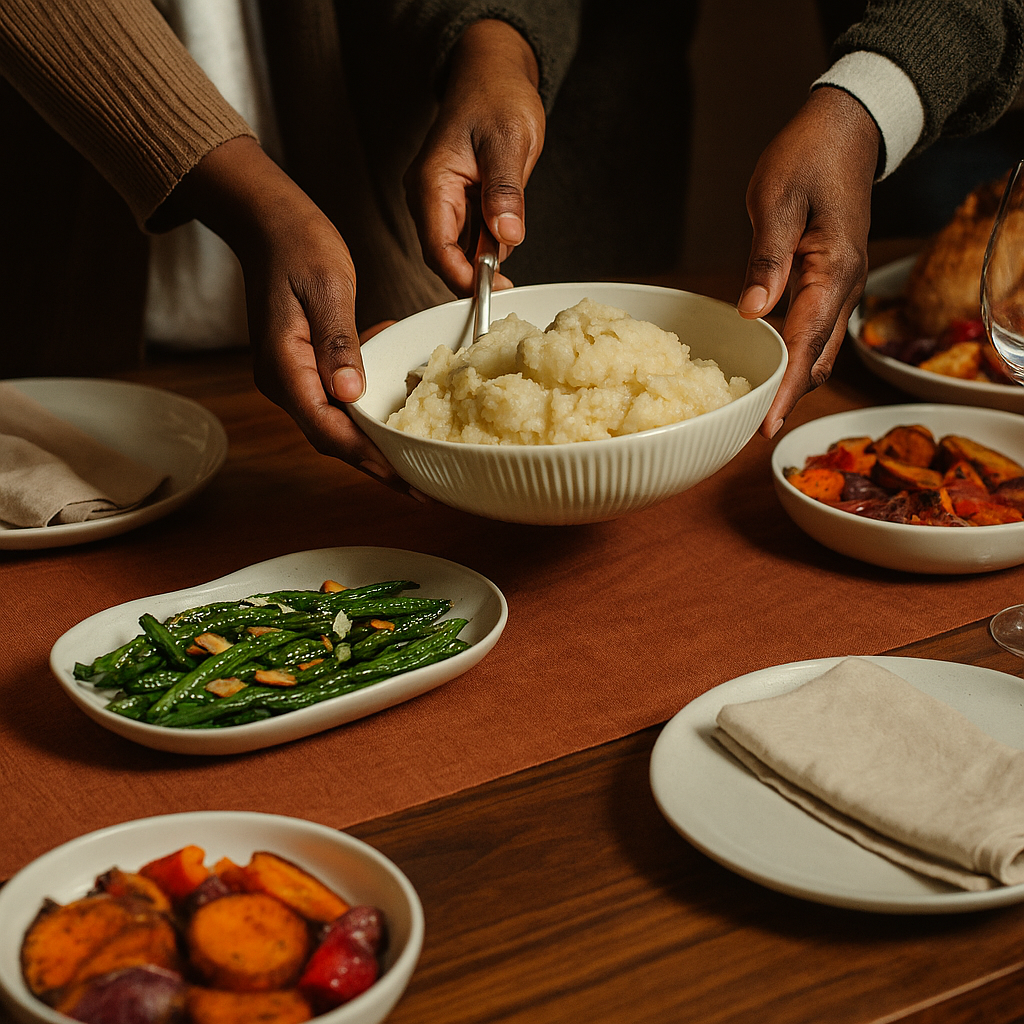
- Greens getting cut and cleaned
- Pies getting ready for the oven
- The roast being seasoned—for the end result
“Mama, you stepped all on this roast.”
This kitchen is as busy as the New York subway.
This is Black cooking tradition.
Not only is the smell of food in the air—
The other smell is love.
“Boy, get out of the kitchen!”
“You girls go set the table—you know how Big Mama wants things.”
“Don’t touch that foil!”
Someone was always trying to steal a taste.
In all the commotion, there was rhythm.
Every step had meaning.
And that meaning was: Sunday dinner would begin.
The Table Was a Clinic
Sunday was a joyous time in African American households.
- Laughter from the young—especially loud when one of them got in trouble
- Sports on TV in the living room
- Loving arguments over which team was best
- Giggling from the girls about some boy they found cute
- Older gents on the porch talking about how the roses were doing this year
Then—it’s time to eat.
Conversations stretch from one end of the table to the other.
Compliments on the food fly around.
Let’s not overlook that sound—
That loving sound of a family happy.
This is Black family wellness.
Healing.
Emotional care in one meal.
It brings us closer.
It gives us a chance to catch up with one another.
Who Sat Where—and Why It Mattered
One thing that goes as far back as the Black family Sunday dinner tradition—Is the seating arrangement.
You didn’t just walk up to the table and expect to see 6-year-old cousin Willie sitting down.
He had his place—the card table.
It wobbled.
The kids all sat there.
Some teenagers hated sitting at that table.
But they forgot they too used to sling food, spill drinks, and talk with their mouth full.
They just hadn’t graduated to the big folks table yet.
At the big folks table, seating wasn’t random.
- The elders had their place—usually at the head
- You didn’t dare put those warring cousins next to each other
- Liking the same guy will do that
But even with all the confusion, the love was plentiful—Even between those two cousins.
The seating arrangements reflected respect, rhythm, and legacy.
Passing the Table Down
The Black family legacy is still in us.
Times have changed, yes.
Even the menu might have changed.
But it’s still colorful—maybe even more colorful than Big Mama’s Sunday spread.
Now, it’s not Uncle Henry who had a touch too much wine.
It’s cousin Vincent—and we don’t know what he’s had too much of.
And the music while the meal is cooking?
It’s no longer Frankie Beverly & Maze.
It’s Fifty Cent.
But Grandma is still in the kitchen, patting her feet and swaying to the beat.
One thing’s for certain—
This Sunday meal still carries the rhythm, the legacy,
and the Black family wellness that was passed down.
We still eat well.
And we enjoy every minute of it.
The Table Still Speaks
The focal point in any Black household is still the dining room.
The paneling may be different.
The carpet another shade of green.
But that Black family love remains.
Traditions are the same—
But some things have changed.
Little cousin Samuel is now sitting at the table, with all of his silliness.
When it’s “Daddy, can I talk to you?” the child is now led toward that dining room table.
But in that kitchen, the ladies still clean the greens and bake the pies—
Humming and smiling all the while.
Sunday dinners still carry that healing feeling, deep inside the soul.
Whether it’s takeout or a full Sunday spread,
the table still holds space for healing, for memory, and for cultural connection.