Social Media for Black Elders Who Still Say “The Facebook”
From tweets to TikToks, aging means learning new platforms while still longing for real porch talk and phone calls that ring.
By ~ronnie
“I joined for the grandkids. I stayed for the church announcements.”
Why Social Media Feels Like a Foreign Language Now
The barbershop is full of activity this Saturday.
Hair clippers shaping edges, trimming beards—everybody’s getting that razor-line respect.
Laughter bounces from front to back.
Can’t tell if these fellas came for a cut or a conversation.
Don’t matter none—everybody’s catching up, talking loud and living proud.
Near the back, Old Red leans over to Mr. Willie: “Willie, I remember when my son in Texas set up that MySpace so I could see pictures of my grandbabies. It was nice, watching them grow up from so far away.
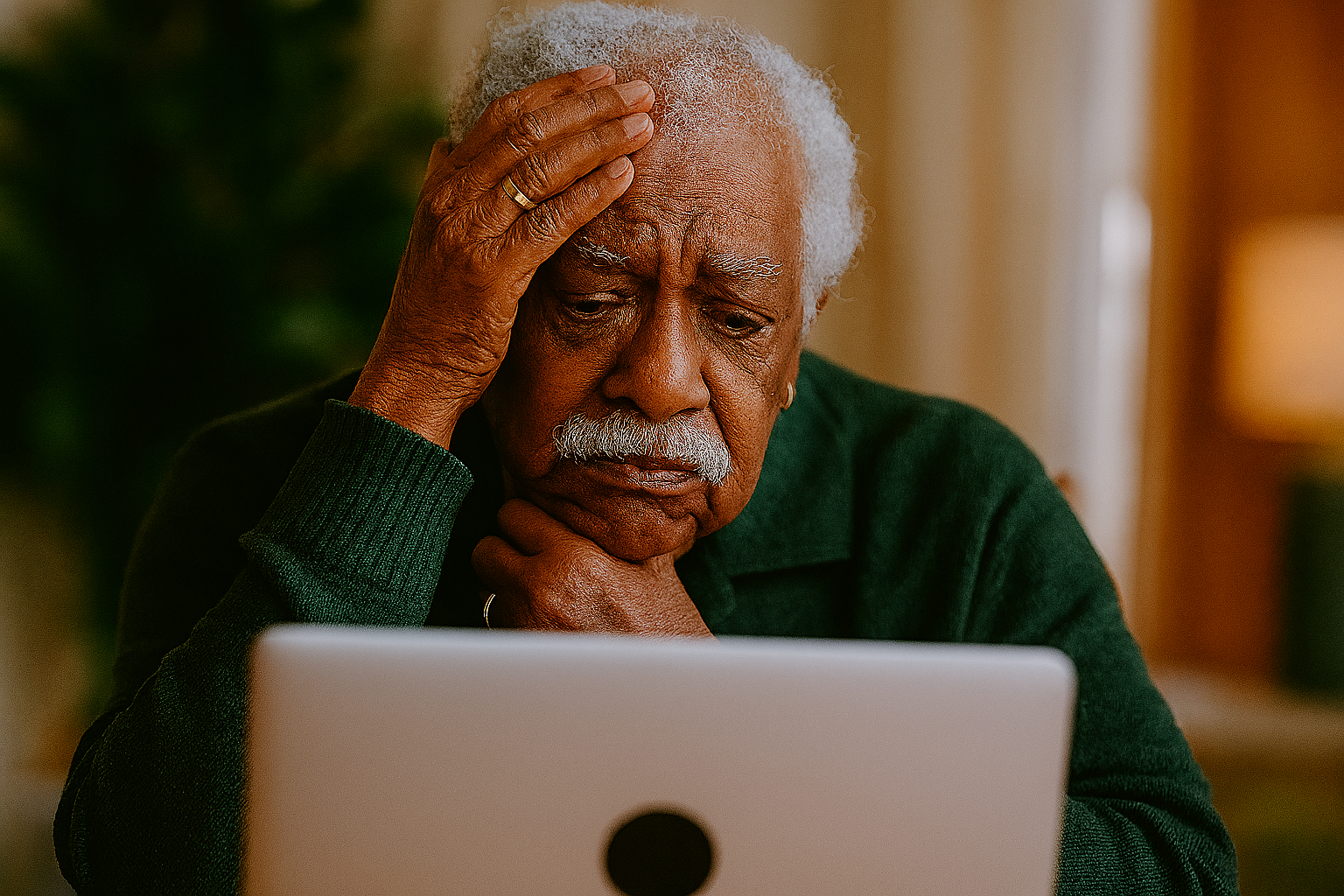
Now they got Facebook, something called Instagram, and another one called Twitter—what the hell, man, I can’t keep up with all that craziness.”
For Black elders, today’s platforms move fast and speak in code.
They’d love to stay connected, but the pace and the language feel foreign.
What used to be a phone call is now a DM—which, to them, stands for a doggone mess.
The Cultural Humor of Calling It “The Facebook”
Saying “The Facebook” isn’t just a slip—it’s a signal.
Black elders are drawing from historical traditions of ownership, resisting the ever-changing tech terms with pride and playfulness.
They’re making it their own.
Whether it’s “The Instagram,” “The Google,” or “FaceTime me on the house phone,” it’s all giving technology the side-eye.
They’re turning complex language into something familiar—something they can understand and pass along.
As their rich legacy shows,
Black elders have survived an unjust world with honor, decency, and ingenuity. They made things work using what they had and what they knew.
Surviving the technological takeover is no different.
If our elders are going to use technology—and all its shifting platforms—it must speak their language.
And they’ll learn it their way: with pride, rhythm, and a nickname or two.
Gen X Caregivers and the Role of Digital Translator
After hanging up with the doctor, Mrs. Renee realized she’d agreed to receive a text message.
She might as well have agreed to run the Boston Marathon—it ain’t in her.
She’s never sent a text.
She’s never received one that she knows of.
Truth is, she doesn’t even know what a text message is.
And now they’re talking about “The Facebook.” What is she supposed to do with that?
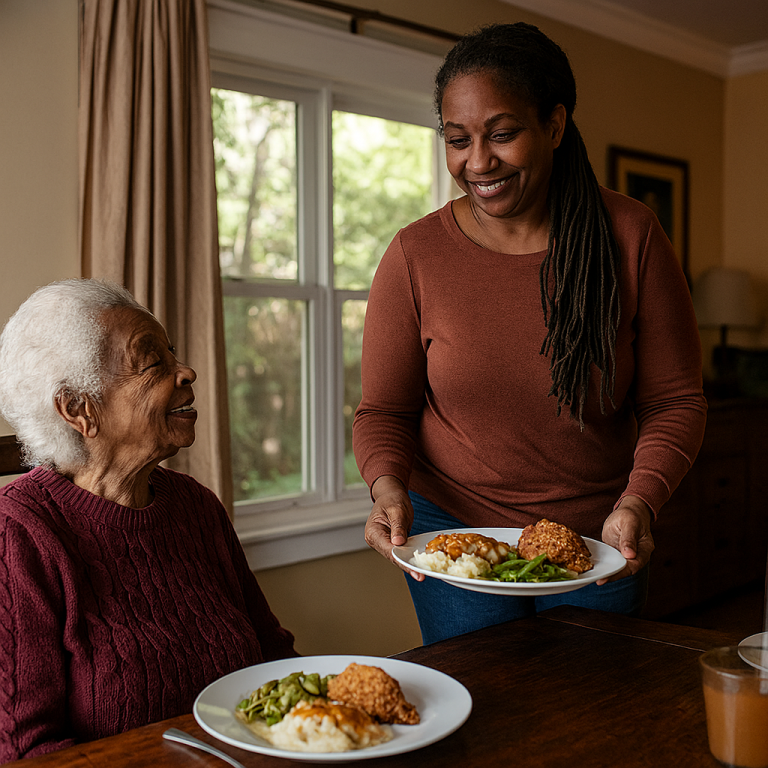
Luckily, she’s got her niece Jenna. Jenna’s been caregiving for Mrs. Renee, and she explains “The Facebook” in ways that make sense.
Gen X often plays tech support for their elders, bridging the gap between apps and actual conversation.
It’s not always easy—tech language is another language.
And Jenna doesn’t understand it all herself.
But first?
Mrs. Renee has to get a computer.
Black elders may not speak fluent tech, but they speak fluent wisdom.
They’ve survived systems, shifts, and shutdowns—and they’ll survive the scroll.
Whether it’s “The Facebook” or a FaceTime on the house phone, they’ll keep showing up with rhythm, pride, and a language all their own.
And with Gen X caregivers translating, laughing, and learning beside them, the digital world might just feel a little more like home.