Health Apps and Black Elders: When Tech Replaces Touch
From portals to pings, aging means managing more apps than grandkids, and still wanting a real person to look you in the eye.
By ~ronnie
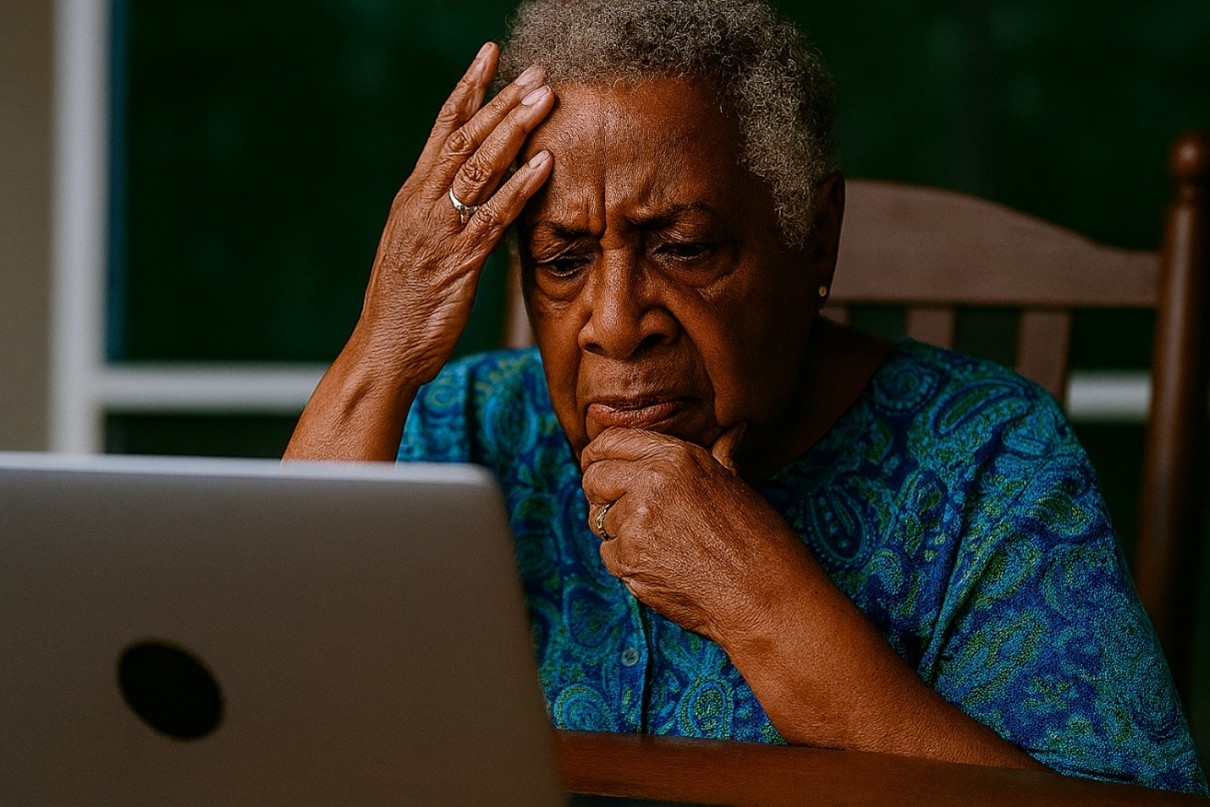
“I’ve got six apps, three passwords, and one body that still needs a hug.”
Why Black Elders Can Feel Overwhelmed by Health Tech
Healthcare is becoming increasingly digital, and some elders are being expected to keep up with patient portals, health apps, video visits, passwords, and constant updates.
Technology can make healthcare faster and more convenient, but convenience depends on being able to use it in the first place. Some older adults face barriers involving devices, internet access, digital skills, and navigating unfamiliar technology.
And technology doesn’t stop changing just because the body has started slowing down.
How does technology expect to keep up with a body that’s already “stove up”?
Technology is fast, efficient, and digital.
But our elders may be at a time in life when slowing down feels just fine.
Quick isn’t always better, especially when you’re trying to understand your healthcare.
And then there’s trust.
For some Black elders, experiences with healthcare can be shaped by concerns about discrimination, distrust, communication, and access. Adding unfamiliar technology to that relationship can create one more thing to understand.
Technical overload doesn’t just complicate care.
It can make healthcare feel less personal.
And that’s worth paying attention to.
The Emotional Cost of Replacing Touch With Taps
“Baby, they say my next appointment is video. What’s dat?”
Big Mama may not know, but her Gen X caregiver struggles with some of this technology too.
She’s wondering how the doctor’s supposed to check her sciatica over a computer, especially since she doesn’t even own one.
And her “sugar”? How he gonna check that?
They told her if she didn’t have a computer, she could use her mobile phone.
Big Mama’s got a house phone, but it’s off right now, and she’s not sure when it’ll be back on.
“Is that what they mean by a mobile phone?”
All this technology is messing with her nerves.
Can they see that over the computer she doesn’t have?
No. In Big Mama’s mind, she needs to see a person.
Health apps and video calls can offer convenience, but for some elders, technology still doesn’t replace eye contact, touch, or the rhythm of a trusted voice.
And that trust?
It wasn’t built overnight.
Gen X caregivers can only offer the truth:
“This is the world we live in now.
And like you taught me, Big Mama, we deal with what we have the best way we can.
“We’ll figure this out together.”
The Caregiver Shuffle: Gen X, Big Mama, and the New Healthcare Rhythm
Gen X caregivers are in a pickle.
They often find themselves standing between elders who remember an analog world and a healthcare system becoming increasingly digital.
They’re juggling tight schedules, caregiving duties, and technology they have to figure out right along with everybody else.
It used to work out fine taking Big Mama to the doctor on the way to drop the grandbaby off at school.
Now?
There may be a video appointment to set up, a portal to log into, or another password somebody has forgotten.
And suddenly the convenience of technology doesn’t feel quite so convenient.
Healthcare still has to happen. App or no app. Password or no password. Video or waiting room.
And truth be told, helping Big Mama navigate this digital maze may be teaching Gen X caregivers something about their own future too.
Their appointments will increase as they age. The technology they’re helping someone else understand today may be technology they depend on tomorrow.
So Gen X caregivers keep rearranging, adapting, logging in, resetting passwords, and showing up.
Some elders may feel overwhelmed by health apps and digital tools, but many have something technology still cannot replace:
Someone willing to sit beside them and say, “Don’t worry. We’ll figure it out.”
The rhythm may be digital now.
But the care still needs to feel human.