The Loneliness No One Talks About: What Aging Feels Like in Our Community
Growing older isn’t just about the body slowing down — it’s about the world getting quieter.
By ~ronnie
“Loneliness hits different when you’ve spent your whole life being strong for everybody else.”
The Quiet That Sneaks Up on You
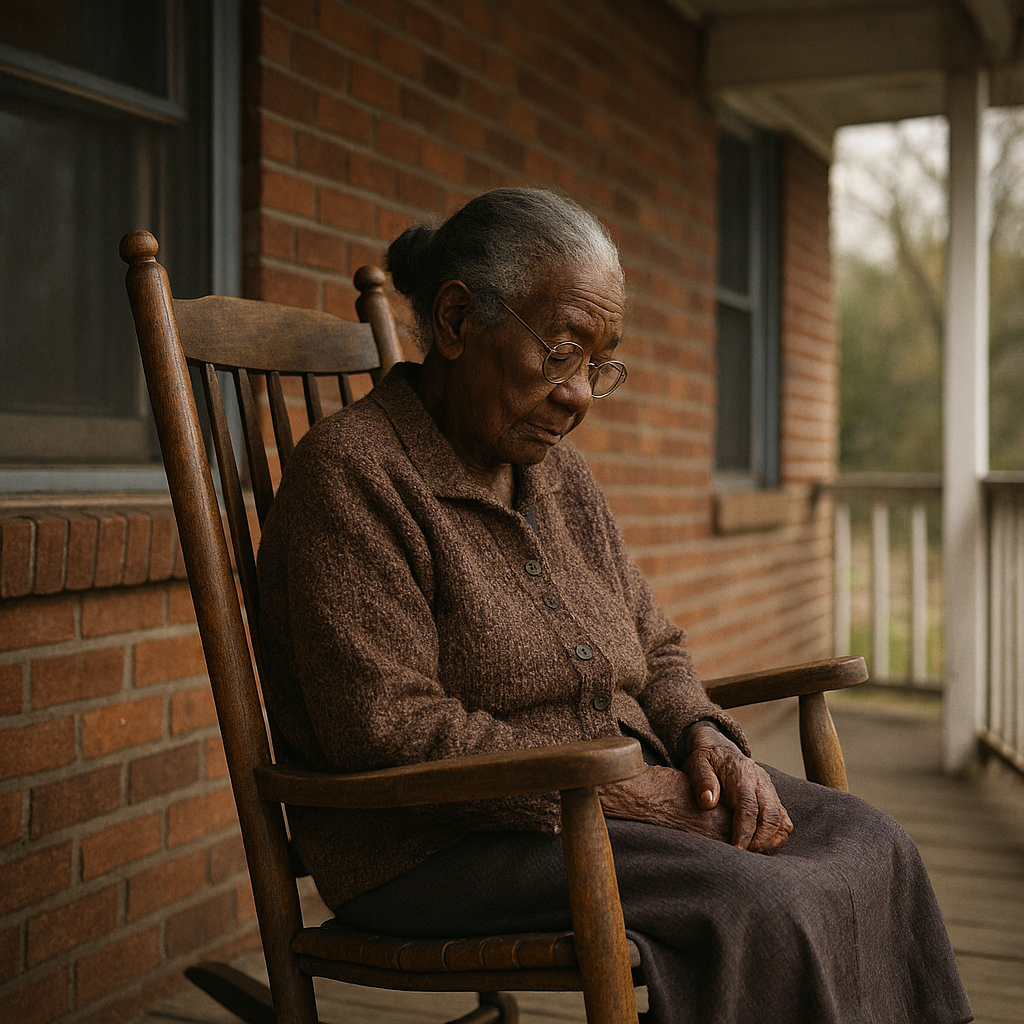
At 405 Belle Ave, in a small brick ranch with a porch stretching across the front, there’s a familiar sight. Mrs. May sits in her rocking chair from morning until night, moving back and forth in a slow, steady rhythm. She wears an old cardigan and a pair of bifocals resting at the tip of her nose. Years ago, she used to wave at neighbors and passing cars, but somewhere along the way, the waving stopped.
Now she sits with her head bowed, as if carrying a weight no one can see. Her husband passed about five years ago, and sometimes I wonder if she’s waiting on him… or if she’s simply waiting on someone to notice her.
That’s when it hit me: loneliness isn’t loud — it sneaks in quietly. And it had settled onto Mrs. May’s porch long before I realized it.
The Kind of Loneliness Elders Don’t Admit
In African American culture, elders were quietly taught to hide pain behind strength — and sometimes behind humor. The “never let them see you cry” mentality goes back generations. Crying, complaining, or burdening someone with your struggles was seen as weakness.
But loneliness still shows up.
The phone doesn’t ring.
Visitors stop coming.
Family drifts away.
Some elders wander the neighborhood just to feel movement around them. Others sit in silent houses that used to be full. And if their upbringing taught them not to reach out — and no one is paying attention — then they’re not just lonely.
They’re lonely with no one listening and no one noticing.
Why Our Community Struggles With This
Elders spent decades being the backbone of the family. They raised children, worked the jobs nobody else wanted, and held households together during times when being Black in America came with daily challenges. Racism, injustice, and survival shaped their lives — but even in those hard years, there were always people around.
The house was full.
The neighborhood was familiar.
Community was close.
Then life shifted. Kids grew up and moved away. Neighborhoods changed. Friends who were once constants began to pass on. The world they knew slowly disappeared, replaced by something unfamiliar.
And that unfamiliarity creates loneliness — because the world as they understood it has shrunk. With family scattered, loved ones gone, and the pace of life speeding up, many elders find themselves standing in a world that no longer feels like theirs.
And far too often, they face that reality alone.
What I Understand Now About Aging
Society tends to see aging as a collection of physical changes — the cane, the gray hair, the slower steps. But aging is deeply emotional. It’s waking up each day to a world that feels a little less familiar, a little less yours. It’s watching people you once depended on disappear from your life, one by one. It’s carrying those changes quietly because you don’t want to be a burden.
Yes, the body slows down. But loneliness is different. Loneliness is mental, quiet, and heavy. And the truth is, you don’t have to be old to feel it — but when you are old, and the world is shrinking around you, that loneliness hits in a way most people never see.
How We Can Show Up Better
“Hello, Mama… just checking in on you.”
“Daddy, I’m coming by Saturday to help with the car.”
“Grandma, I got your new phone — I’ll set it up tonight.”
These small actions may feel ordinary to us, but they mean everything to the elders in our lives. We love them — we just forget to show it. And sometimes, showing up is all it takes to keep loneliness from settling in.
Full Circle
The next time I pass 405 Belle Ave, I’m not just going to glance at the porch. I’m going to stop. I’m going to wave. I’m going to say hello.
Because loneliness doesn’t always look like someone crying out for help.
Sometimes it looks like a quiet porch, a still rocking chair, and an elder who hasn’t been seen in a long time.
And maybe — just maybe — noticing them is the first step in making sure they never feel invisible again.